
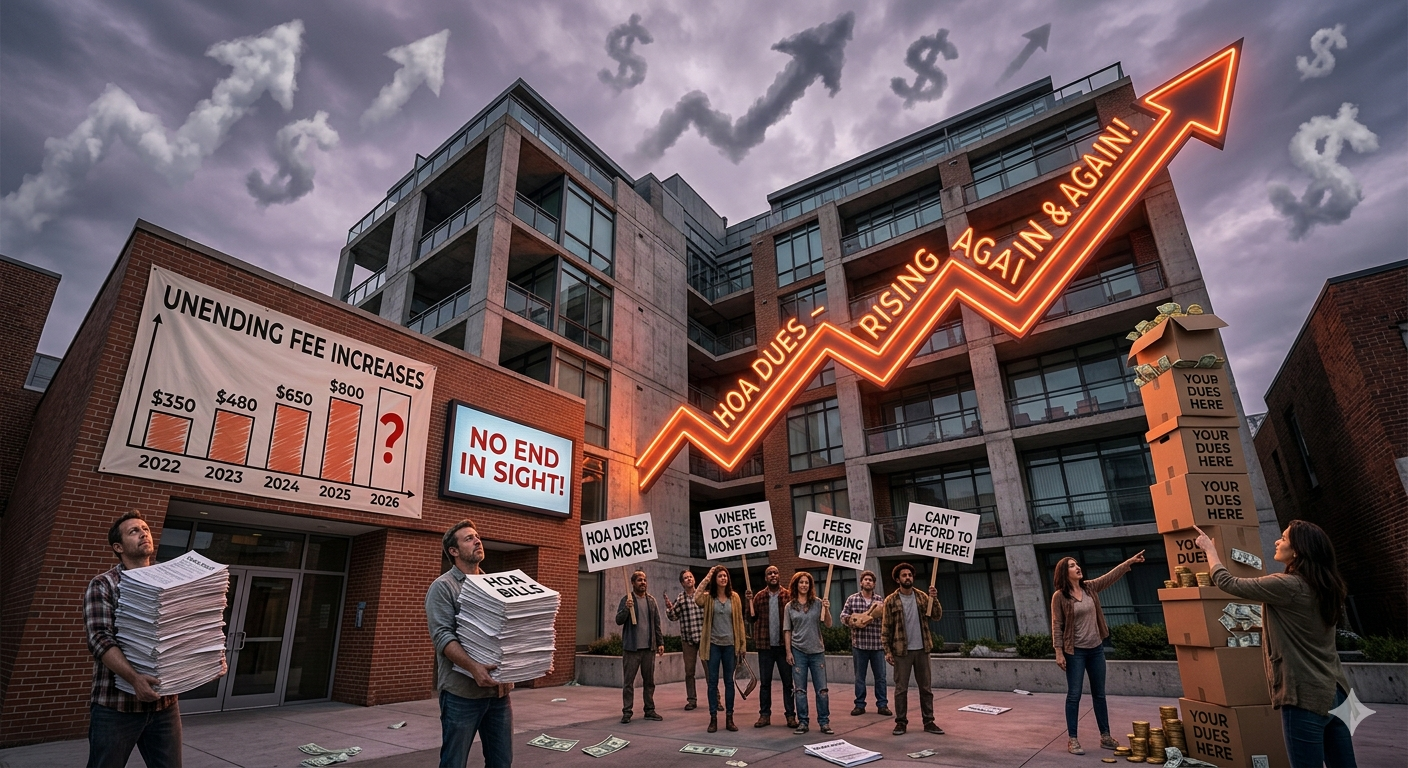
The condo market in 2026 is facing a “shadow mortgage” crisis as Homeowners Association (HOA) dues continue to climb at rates that often outpace inflation. For many owners, these monthly fees have transformed from a secondary expense into a primary driver of housing affordability and property value.
- Skyrocketing Insurance Premiums: In states like Florida, California, and Washington, property insurance costs have doubled or tripled in recent years. Climate risks—including wildfires and rising sea levels—have forced many carriers to withdraw, leaving associations with fewer, more expensive coverage options.
- The “Surfside Effect” and Reserve Mandates: Following the 2021 Surfside collapse, new state regulations (particularly in Florida) now mandate stricter structural inspections and fully funded reserves. Many associations that historically kept dues low by deferring maintenance are now being forced to play “catch-up” with massive fee hikes and special assessments.
- Operational Inflation: The cost of labor and materials for essential services—such as landscaping, elevator maintenance, and roofing—has surged. Utility rates for water, sewer, and electricity are also seeing significant approved increases in 2026 to fund aging municipal infrastructure.
Rising dues are fundamentally reshaping the condo landscape, creating a distinct “condo correction” in 2025 and 2026.
- Weakening Sales and Falling Values: High fees act like an additional mortgage payment, directly reducing a buyer’s purchasing power. In markets with exceptionally high dues, condo inventory has spiked as owners sell to avoid unsustainable costs. National data shows condo supply at its highest level since 2011, leading to price declines of 15–20% from pandemic peaks in cities like Austin, Oakland, and St. Petersburg.
- The Rental Competition: In many urban centers, a flood of new luxury apartment construction has made renting significantly cheaper than owning a condo once mortgage and HOA fees are combined. In some cities, renting a similar unit is 40–50% cheaper than owning, further dampening buyer demand for condos.
- “Un-Lendable” Buildings: Fannie Mae and Freddie Mac have tightened requirements for condo mortgages. Buildings with inadequate reserves or deferred maintenance may find themselves on “restricted lists,” meaning buyers cannot obtain conventional loans, effectively tanking the building’s resale value.
- Alternative Revenue Streams: Modern associations are generating cash by renting out underused spaces (parking, storage), installing vending/laundry machines, or leasing roof space for solar panels and cell towers. Some boards even grant exclusive marketing rights to broadband providers in exchange for ongoing revenue.
- Operational Audits and Bulk Purchasing: Boards can reduce costs by negotiating vendor contracts, switching to energy-efficient LED lighting, or utilizing bulk purchasing for maintenance supplies.
- Buyer Negotiation: In a slow market, buyers can negotiate for the seller to prepay 6 to 12 months of HOA dues as a closing concession.
- Transparency and Reserve Studies: Conducting regular professional reserve studies prevents “shocks” by allowing the board to implement small, predictable annual increases rather than sudden, massive special assessments.
For those currently looking to buy, it is critical to review the association’s financials and “reserve study” to ensure the building isn’t hiding a future financial crisis. Would you like a checklist of questions to ask a condo board before making an offer?
-
Study: Homeowners Associations Are Booming
Mar 14, 2024; Concerns Over HOA Fee Increases More than half, 57% of people who live under HOAs say they don’t like it, according to a study by the
National Association of REALTORS® -
How rising HOA fees can act like shadow mortgages – Bankrate
Mar 19, 2026 — HOA fees can impact your equity and housing value. Normally, as you pay down your mortgage, your equity increases.
-
Understanding HOA Fee Increases: Why Higher Dues Keep …
Many associations face steep increases in property and liability insurance especially in states like California and Texas.
- What is the “Percent Funded”? A healthy building is usually 70% funded or higher. If it’s under 30%, a massive special assessment is likely in your near future.
- When was the last professional Reserve Study conducted? In Washington and Oregon, these should be updated annually. If it’s more than 3 years old, the board is “flying blind” on repair costs.
- Are there any active or planned special assessments? Ask specifically about upcoming “envelope” projects (roof, siding, windows).
- Does the building have a history of frequent assessments? This is a red flag for a board that refuses to raise regular dues to sustainable levels.
- What is the building’s deductible? If the building’s master policy has a $50,000 or $100,000 deductible, you need to ensure your personal “HO-6” insurance policy has “Loss Assessment” coverage to match it.
- Is the HOA involved in any active litigation? Lawsuits (especially with developers or over defects) can make a building “non-lendable” for conventional mortgages.
- What is the owner-occupancy ratio? If more than 50% of the units are rentals, it may be harder to get a loan.
- What percentage of owners are behind on their dues? If more than 15% of owners are delinquent, the HOA may struggle to pay its bills, forcing the “good” owners to cover the deficit.
- How much have dues increased annually over the last 3 years? A steady 3-5% increase is normal and healthy; a 0% increase for years followed by a 25% jump indicates poor management.
- What is the “Utility Strategy”? Are water, sewer, and garbage included in the dues, or are they sub-metered? Sub-metering is more predictable for the HOA’s long-term budget.
