
The Realtor’s Guide to AI in 2026: Elevating Expertise Without Losing the Human Touch
As we move further into 2026, Artificial Intelligence has shifted from a futuristic novelty to a core productivity engine for top producing real estate professionals. But for those of us in the field, the question isn’t whether AI will replace us, it’s how we can use it to amplify our value while avoiding the pitfalls that threaten client trust.
Here is how AI is reshaping our day-to-day work this year and where you still need to keep your hands on the wheel.
The “Useful”: Where AI Wins in 2026
1. Predictive Analytics: Seeing the Market Before It Happens
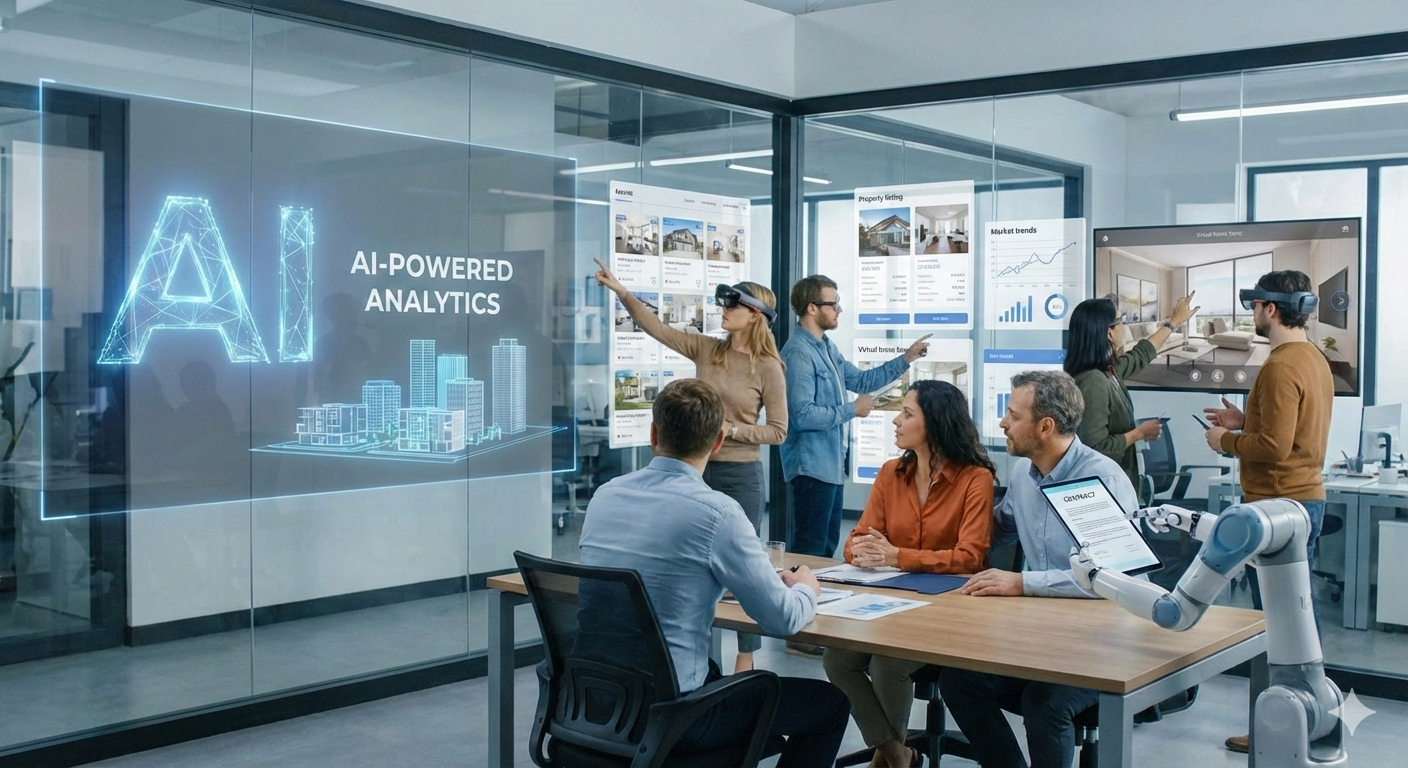
Gone are the days of relying solely on past comps. In 2026, AI-driven predictive analytics allow agents to forecast neighborhood trends with startling precision. Tools and systems can now analyze millions of data points, including local economic indicators and even infrastructure development to predict price appreciation street-by-street, not just by zip code. This allows you to position your sellers for the “next big thing” before it’s common knowledge.
2. Hyper-Personalized Lead Nurturing
Modern CRMs have evolved into “Agentic AI” systems. Instead of just sending a generic monthly newsletter, 2026 tools track specific buyer behaviors, such as which property photos they spend the most time on or when they are most active to trigger perfectly timed, hand curated alerts. You aren’t just chasing leads; you’re providing value exactly when they are ready to act.
3. Streamlining the “Paperwork Drudgery”
Administrative tasks remain the biggest time-sink in real estate. AI now manages entire transaction workflows, from drafting disclosure, friendly listing descriptions to verifying contracts for missing signatures and flagging inconsistencies in tax records. These tools act as a second pair of eyes, reducing the risk of human error during the high stakes escrow process.
4. Visual Marketing at Scale
AI rendering has become the industry baseline for professional listing presentations. In 2026, you can virtually stage a vacant home in multiple styles or “upgrade” dated finishes in seconds to show potential, significantly reducing days on market without the massive overhead of physical staging.
The “Not So Useful”: The Limits of the Machine
1. The Loss of the “Personal Touch”
Real estate is, and always will be, a relationship-driven industry. While AI can draft an email or a chatbot can handle a midnight inquiry, over reliance on automation can leave clients feeling like just another number. Clients still crave the empathy, nuance, and reassurance that only a human professional can provide during an emotional transaction.
2. Inaccuracy and Lack of Local Context
AI “hallucinations” are a real risk. An AI might produce a confident sounding valuation or market report that completely misses hyper local nuances like a specific school district boundary change or a unique neighborhood quirk that isn’t captured in public data. As an agent, you remain the “final source of truth”.
3. Data Bias and Ethical Risks
AI systems are only as good as the data they are trained on. There is a documented risk of AI inadvertently perpetuating biases in marketing or lead scoring, which can lead to Fair Housing Act violations. Professional judgment is required to ensure that AI-generated content remains compliant and inclusive.
4. The Ethics of “Digital Manipulation”
While AI edited photos are standard, 2026 brings stricter disclosure rules. In many jurisdictions, you must now clearly watermark “Virtually Staged” or “Rendered” to maintain transparency. Using AI to hide defects (like a hole in a wall) rather than showing potential is a fast track to legal trouble and a ruined reputation.
The Bottom Line for 2026
The agents winning in today’s market treat AI like a highly skilled assistant, not a replacement.
- Use it to move faster: Automate your drafts, your research summaries, and your scheduling.
- Keep your voice human: Never send AI generated content without a personal review to add your own brand’s “flavor” and expertise.
- Stay accurate: Always verify the legal and financial details AI provides against trusted sources.
In 2026, AI can give you back your time, but only you can build the trust that closes the deal.
