
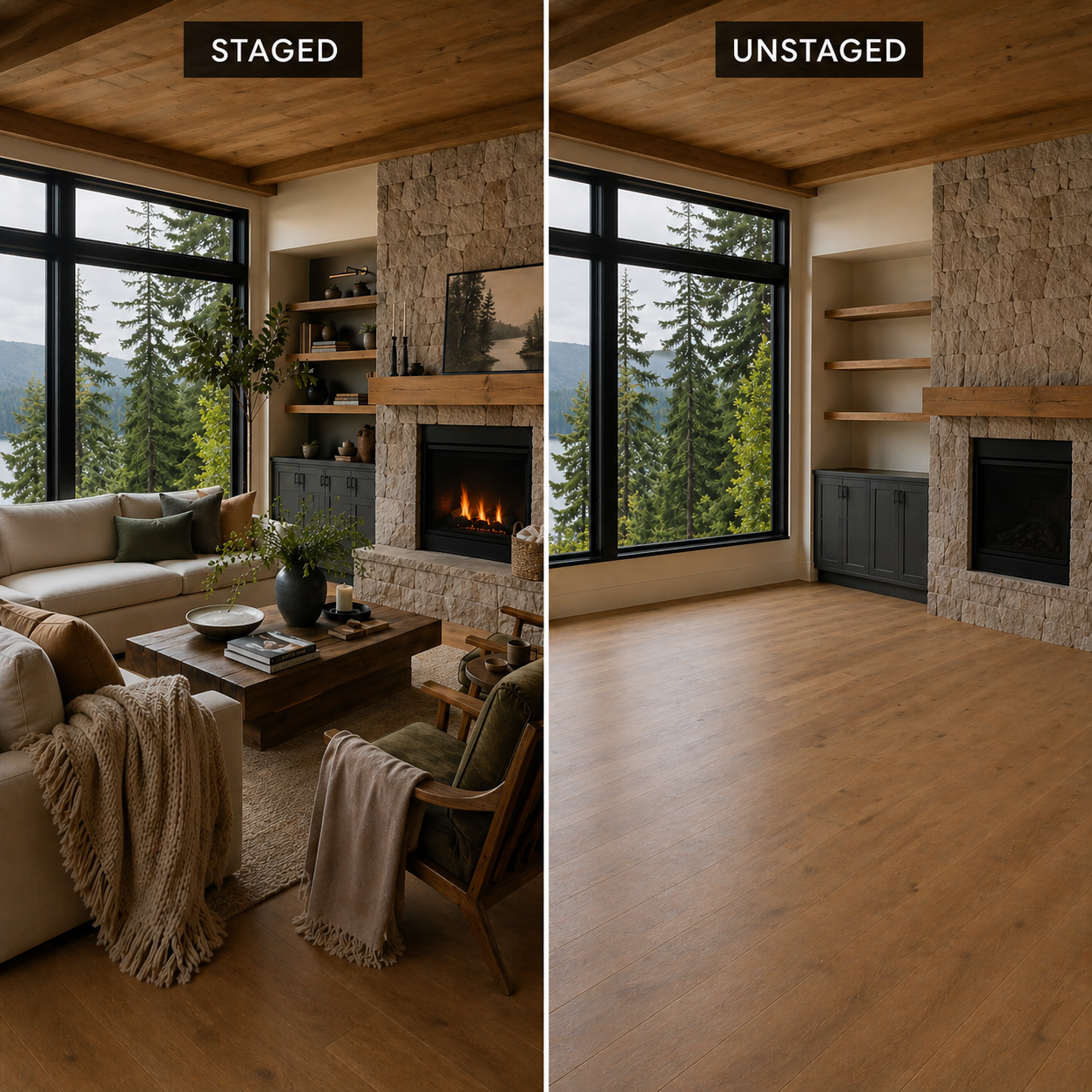
- The Benefit: Professional staging provides the “bones” for high-end photography. Since staged homes receive 118% more online views, staging serves as the primary hook that converts a “scroller” into a “tourer.” Without it, even a beautiful home can look flat or small in photos, leading buyers to skip the listing entirely.
- The Benefit: Staging solves the “visual math” for the 81–83% of buyers who struggle to imagine furniture placement. By defining the Living Room (rated 91% in importance) or the Primary Bedroom, you remove the mental work for the buyer. When they don’t have to worry about where the sofa goes, they can spend their energy imagining their own life in the space.
- The Benefit: Staging allows you to dictate the narrative of awkward or underused spaces. A professional stager can turn a weird nook into a cozy reading corner or a basement corner into a high-functioning gym, showing the buyer that every square inch of the home has value and purpose.
- The Benefit: Strategic staging directs the eye toward the strengths of the home—such as natural light, high ceilings, or a beautiful fireplace—and away from minor flaws. It creates a sense of “move-in readiness,” which is highly prized in a market where buyers are wary of immediate renovation costs.
- The Benefit: It is much easier to defend a high asking price when the home looks like a “model.” If a home sits on the market for several weeks, buyers begin to wonder “what is wrong with it,” leading to lowball offers. Staging maintains the perceived value from day one, making the $2,000–$3,500 investment a much cheaper alternative than a $20,000 price reduction.
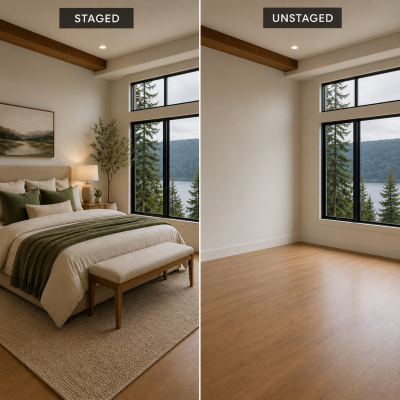
- Living Room (91% importance)
- Primary Bedroom (83%)
- Kitchen (68%)
- Dining Room (69%)
Note from our CEO: There are many factors which go play a part in the final selling price of a home. Some of but not all are overall condition, major components, (HVAC, roof, electrical) to name a few. Even if the home is staged well and looks great, money still could be left on the table after inspections. However, if the buyer never walk through that door, you lost before getting started. In my experience you have two chances to turn a window shopper into a buyer. The first is online, so visually your homes online presence must look great. Second is when that shopper see the home in person. With the right staging you can capture their imagination, in that, if the shopper can imagine themselves, their children playing or BBQ’s in summer or sitting by the fireplace with loved ones. If the shopper can do this, then they become the buyer.