
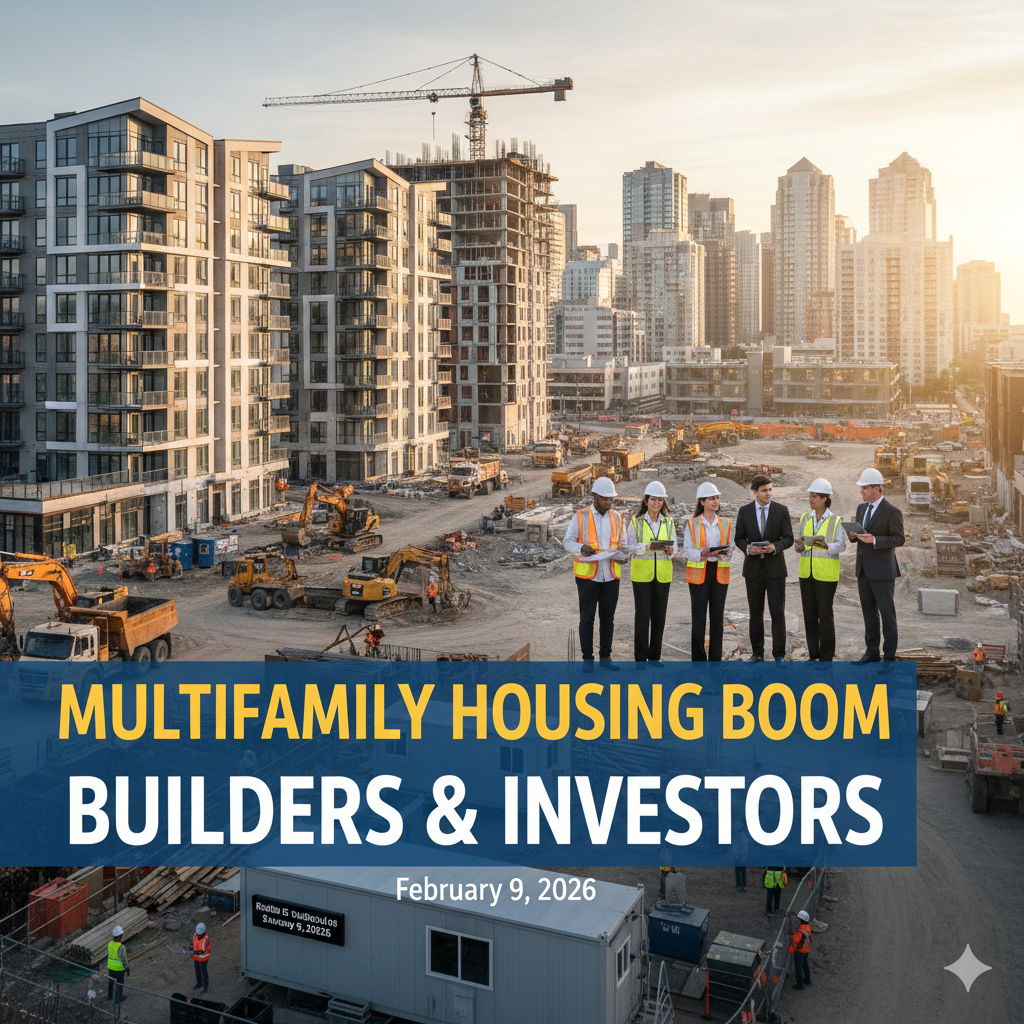
For decades, the “American Dream” was synonymous with a white picket fence and a single-family home. However, as we move through 2026, a seismic shift in urban planning and real estate investment is underway. The push for multifamily housing apartments, townhomes, and “missing middle” duplexes is no longer just a trend; it is a national economic necessity.
Driven by soaring land costs, a persistent housing shortage, and changing lifestyle preferences, the multifamily sector has become the darling of institutional and individual investors alike.
Why the Push? The Pros and Cons
The transition toward higher-density living is a polarizing topic in local city halls, pitting urban planners against “NIMBY” (Not In My Backyard) advocates.
The Pros (The “Why”)
- Affordability & Supply: Increased density is the most effective tool to combat the national housing deficit. By building “up” rather than “out,” cities can house more people on the same amount of land.
- Sustainable Infrastructure: Multifamily units are generally more energy-efficient and reduce urban sprawl, making public transit more viable and decreasing the carbon footprint per capita.
- Stable Cash Flow: For investors, multifamily properties are “recession-resilient.” Even when people stop buying homes, they still need a place to rent.
The Cons (The “Challenges”)
- Infrastructure Strain: Rapid high-density development can overwhelm local schools, traffic systems, and utility grids if not managed properly.
- Management Intensity: Managing 50 tenants is significantly more complex than managing one. It requires professional property management, which eats into margins.
- Zoning Friction: In many US markets, “exclusionary zoning” still makes it illegal to build anything other than a single-family home on most lots, leading to long, expensive legal battles for developers.
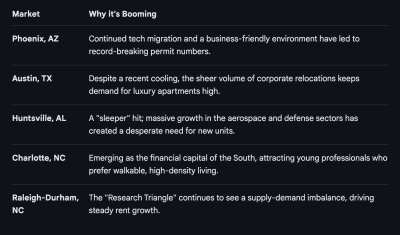
Fastest Growing Multifamily Markets in 2026
While traditional hubs like New York and San Francisco remain staples, the real explosive growth is happening in “secondary” markets where jobs are migrating and land is still available.
How the “Average Person” Can Become a Multifamily Investor
You don’t need $10 million to get into the multifamily game. Here is how an average individual can transition from a renter or single-family owner to a multifamily developer.
1. The “House Hack” (The Entry Point)
The easiest way to start is by purchasing a 2-to-4 unit property (duplex, triplex, or fourplex).
- The Strategy: Live in one unit and rent out the others.
- The Benefit: If you live on-site, you can use an FHA loan, allowing you to put down as little as 3.5%. This is the only way to control a multi-unit asset with very little starting capital.
2. Real Estate Syndication (The Passive Route)
If you have some capital but no time to manage a building, look into syndications.
- How it works: You “pool” your money with other investors. A professional “General Partner” finds, buys, and manages a large apartment complex.
- Your role: You are a “Limited Partner” (LP), receiving a share of the monthly rent and a payout when the building is eventually sold.
3. New Construction (The “Missing Middle”)
In states like Washington and Oregon, new laws have effectively ended single-family zoning, allowing you to build ADUs (Accessory Dwelling Units) or duplexes on standard residential lots.
- The Play: If you own a home with a large lot, you can “develop” it by adding a secondary unit or converting the garage into a legal apartment. This turns your single-family residence into a multifamily asset.
4. REITs (The Stock Market Route)
For those who want zero headaches, Real Estate Investment Trusts (REITs) allow you to buy shares of companies that own thousands of apartment units. It is as liquid as buying a stock but offers exposure to the multifamily market.
Final Thought
The rise of multifamily housing is a response to a changing world. Whether you are looking to solve the housing crisis or build personal wealth, the “power of the many” (units) offers a level of scale and stability that single-family homes simply cannot match.
